Conversation with Dr. James Loden

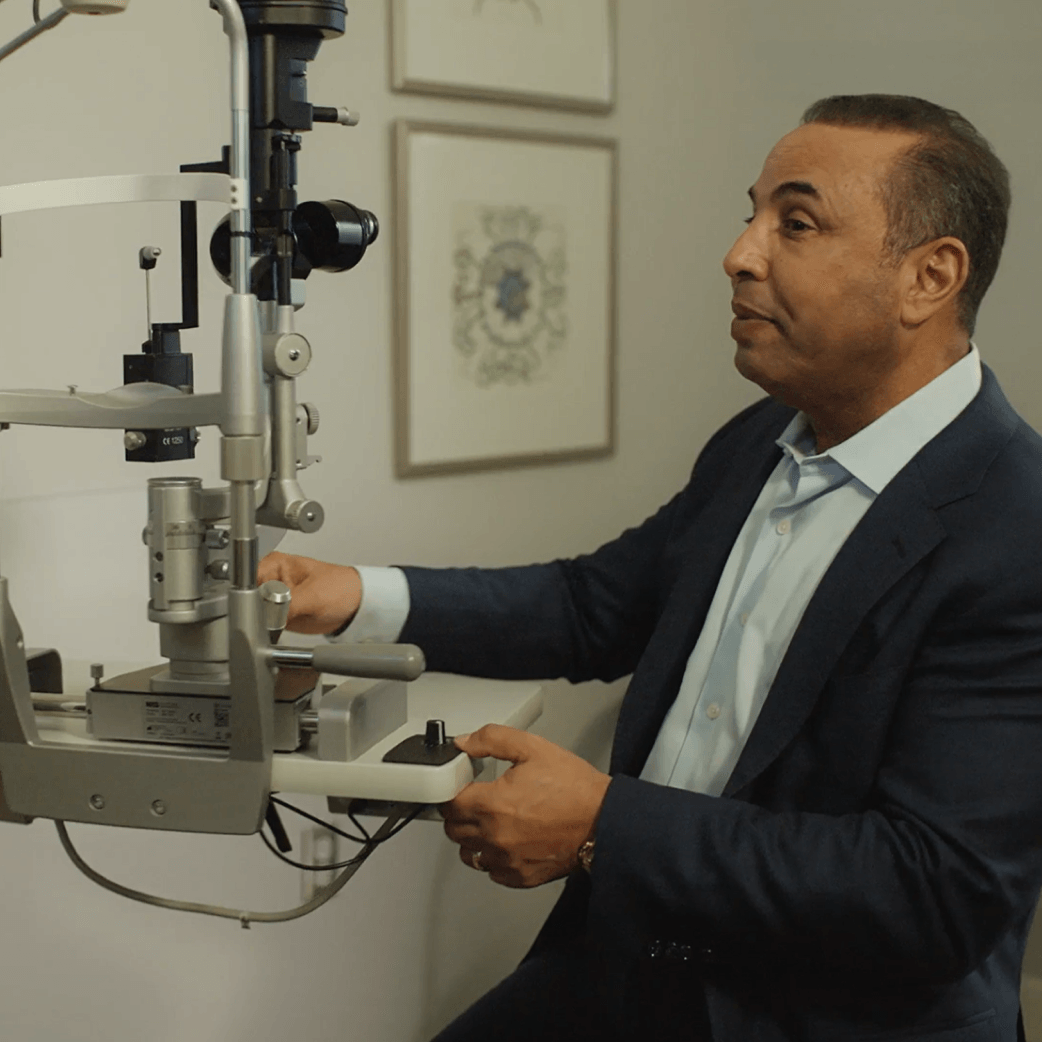
Dr. James Loden has spent decades building one of the most respected vision care practices in Tennessee. Over that time, he has seen what drives growth in a real practice environment, what creates trust with patients, and what allows a center to expand without losing the standard that made it successful in the first place.
In this conversation, Dr. Loden discusses the economics of surgery, the role of workflow in supporting volume, the importance of patient experience, and why he believes the next phase of growth in vision care will come from applying proven practice methods more broadly.
Q: When you look at vision care as a business, where do you see the biggest opportunity for growth?
Dr. Loden: The opportunity is enormous because some of the most life-changing procedures we perform take only 6 to 10 minutes. When you really look at the economics, the time value is extraordinary. A procedure can generate meaningful revenue in a very short window, and when that is supported by the right patient flow and the right infrastructure, the performance potential becomes very significant.
That is why utilization matters. If you have the surgeons, the facilities, and the clinical reputation already in place, the question becomes how to make the most of those same 6 to 10 minutes over and over again. That is where real growth shows up.
Q: What allows your centers to move patients efficiently without compromising care?
Dr. Loden: It starts with the patient experience from the very first point of contact. That could be the call center. It could be the online scheduler. From there, the patient comes into the clinic for a full pre-operative evaluation, meets with the doctor, learns which procedures they qualify for, and receives a clear recommendation based on their history and examination.
Once the patient decides to move forward, they go to a surgery counselor, the procedure is scheduled, and then it is performed.
That process matters because it creates flow. It allows us to see multiple patients each day, get surgeries booked quickly, and keep everything moving in a timely way. We also control the environment. We have our own lasers, our own LASIK center, and our own cataract and lens implant center. That means we control staffing, we control surgical timing, and we can move patients through the practice in a way that is efficient and respectful of their time.
Q: You’ve spoken about growth coming from both word of mouth and external marketing. How do those two forces work together?
Dr. Loden: Word of mouth has always been at the center of practice growth. Patients talk about their experience. They tell friends and family whether they felt cared for, whether the outcome was strong, and whether they would recommend the practice.
That kind of trust is incredibly valuable.
External marketing plays a different role. It extends the brand beyond the patients who already know you. It helps bring in people who may be excellent candidates but have not yet found their way into the practice. What matters is doing that efficiently and bringing in the right patients, not simply more names at a higher cost.
That is one of the reasons this next chapter is so compelling. If marketing can become more precise and better aligned with who is likely to be a strong candidate, then the practice can grow in a more disciplined way.
Q: What have you learned about scaling across multiple locations while keeping the standard high?
Dr. Loden: We built our centers to grow, but we never lost sight of the standard. Each patient is an individual person who deserves extraordinary treatment. That has to hold whether you have one location or five.
In Nashville, we started with a smaller practice and grew into multiple busy centers across the region. We became the local leader by staying focused on care, customer service, and outcomes. That is what gave us the ability to grow.
To me, the proof is already there. Scaling is possible while maintaining the quality of the experience. The challenge is doing it in a way that can be carried into other markets with the same level of discipline.
Q: You’ve described your approach as something close to a cookbook or playbook. What do you mean by that?
Dr. Loden: Over time, you learn what steps consistently create a strong patient experience. You learn how patients should move through the practice, how expectations should be set, how surgery should be scheduled, and how to deliver care in a way that people remember and recommend.
That knowledge becomes repeatable.
When I say cookbook, I mean we know the steps. We know how to produce a high-service experience while also creating a busy surgical practice. That is valuable because it gives other doctors a framework they can apply in their own environment.
Every market has its own nuances, of course. Every doctor has their own style. But when the fundamentals are sound, the model can travel.
Q: Why does vertical integration matter so much in this category?
Dr. Loden: A lot of practices do not have the full range of capabilities under one roof. They may not control their surgery center. They may not own a LASIK center. They may not have the latest technology available to them when they need it.
That impacts more than convenience.
It affects flow, timing, staff communication, and what the patient actually experiences. It also affects the doctor’s ability to deliver the full quality of care they want to provide. For example, with premium lens procedures, some patients need a touch-up afterward to get from good to truly excellent. If you do not have access to that kind of capability, it limits what you can offer.
When the key pieces are close together and under the doctor’s control, the practice can operate with much greater precision. The patient feels that. The doctor feels that too.
Q: Why does this feel like an important next chapter for you personally?
Dr. Loden: After 28 years as a surgeon, it’s not easy to find something that feels as meaningful as the early days of building a practice. For me, this does.
What makes it exciting is the chance to take everything my team has learned and turn it into something that can help other doctors succeed. There are excellent surgeons around the country who are ready to grow but may not yet have every part of the practice aligned to support that next level.
Helping them get there is meaningful work.
Q: What do you believe Altivera can make possible from here?
Dr. Loden: I believe Altivera creates the opportunity to extend what we have already proven. Strong clinical care. Strong patient experience. Better patient acquisition. Better use of capacity. Better alignment around growth.
For doctors, that means the ability to build a stronger practice without losing control of what matters most.
For investors, it means participating in a model where the economics are supported by real clinical demand, real infrastructure, and a playbook that has already been tested in practice.
That’s why this matters.